
Frequently asked questions
Company News
- Aluminum veneer exterior wall, creating a new trend of fashionable home decor!
- Ladies and gentlemen of architecture and decoration, today let's talk about the topic of aluminum veneer. Can you
- Customize your aluminum veneer and choose any style you want
- Aluminum veneer for exterior walls: full analysis of price and construction
- Customized aluminum veneer to create your own aesthetic space
Industry dynamics
- Suggestions for optimizing material selection and construction technology for customized aluminum veneer
- Aluminum veneer: the fashionable "coat" of modern architecture
- Is the production process of aluminum veneer harmful to the environment?
- Fashion and practicality coexist: exploring the world of perforated aluminum veneer
- The Secret of Aluminum Curtain Wall: Exploring Cost, Materials, and Quality
Frequently asked questions
- How to identify the quality of aluminum veneer?
- What are the installation methods and precautions for aluminum veneer?
- What is the difference between aluminum veneer and other metal materials?
- What are the different types and models of aluminum veneer?
- What is the production process of aluminum veneer?
contact us
Mobile:+86 15627778610
Email: 2201229786
Address: No. 5 Binjiang Road, High tech Zone, Zhaoqing City, Guangdong Province
What are the different types and models of aluminum veneer?
- Author: Supreme Building Materials (Guangdong) Co., Ltd
- Release time: 2022-02-23 22:13:13
- Click:0
What are the different types and models of aluminum veneer?
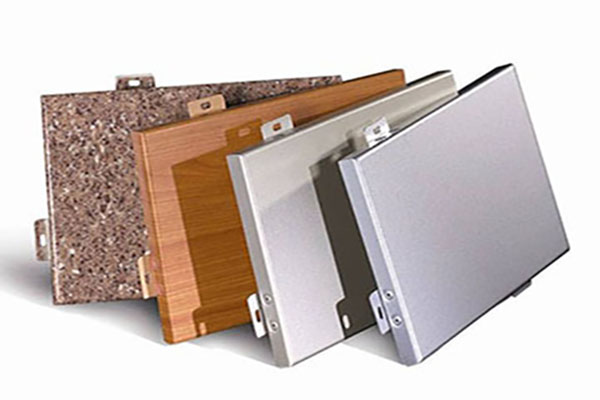
Aluminum veneer is a commonly used building decoration material that is lightweight, sturdy, and corrosion-resistant. It is widely used in fields such as exterior walls, ceilings, and indoor partitions. According to different needs and usage environments, aluminum veneer is divided into various types and models. This article will provide a detailed explanation from the aspects of material, surface treatment, thickness, and model.
1、 Material
According to the different materials of aluminum veneer, it can be divided into two categories: aluminum alloy veneer and aluminum-plastic panel.
1. Aluminum alloy veneer: Aluminum alloy veneer is a type of veneer material made by processing pure aluminum or aluminum alloy. It has high strength and corrosion resistance, suitable for outdoor environments. Aluminum alloy veneer is usually coated with fluorocarbon spray technology, and the surface coating has characteristics such as anti fouling and self-cleaning.
2. Aluminum plastic panel: Aluminum plastic panel is a material composed of an aluminum alloy panel and a plastic layer in the middle. Compared to aluminum alloy veneer, it is lighter and more flexible, suitable for some bending or bending installation scenarios. Aluminum plastic panels are commonly used in the field of interior decoration, such as indoor partitions, furniture, etc.
2、 Surface treatment
There are various surface treatment methods for aluminum veneer, including fluorocarbon spraying, powder coating, and anodizing.
1. Fluorocarbon spraying: Fluorocarbon spraying is currently the most widely used surface treatment technology. It has good weather resistance and corrosion resistance, which can effectively protect the surface of aluminum veneer from external environmental influences, and has a rich color selection to meet the needs of different architectural styles.
2. Powder coating: Powder coating refers to spraying solid granular pigments onto the surface of aluminum veneer through a spray gun, and then melting and forming a uniform coating at high temperature. Powder spraying has high adhesion and scratch resistance, making it suitable for occasions with high surface requirements.
3. Anodizing: Anodizing is a treatment technique that generates an oxide film on the surface of aluminum through electrochemical methods. This oxide film has a certain degree of hardness and wear resistance, which can effectively protect the surface of aluminum veneer, and can achieve different color effects through dyeing and other methods.
3、 Thickness
The thickness of aluminum veneer generally comes in different specifications such as 2mm, 2.5mm, 3mm, etc. Choose the appropriate thickness according to different usage scenarios and design requirements.
1. 2mm thick aluminum veneer: 2mm thick aluminum veneer is relatively light and suitable for indoor decoration, ceiling and other occasions, especially for places that are sensitive to weight or require bending installation.
2. 2.5mm thick aluminum veneer: Compared to 2mm thick aluminum veneer, 2.5mm thick aluminum veneer is more sturdy and suitable for situations such as large building exterior walls that require greater wind pressure and load.
3. 3mm thick aluminum veneer: 3mm thick aluminum veneer has higher strength and rigidity, suitable for high-rise building exterior walls with high wind resistance requirements, and can effectively improve the safety of buildings.
4、 Model number
There are various types of aluminum veneer, including flat panels, corrugated panels, and perforated panels.
1. Flat panel: Flat aluminum veneer is the most common type, with a flat and smooth surface, suitable for large-area exterior wall decoration, and has a simple and atmospheric effect.
2. Corrugated board: Corrugated aluminum veneer is processed into a wavy shape on the surface, which increases the three-dimensional sense and decorative effect, and is suitable for some special buildings or personalized decoration needs.
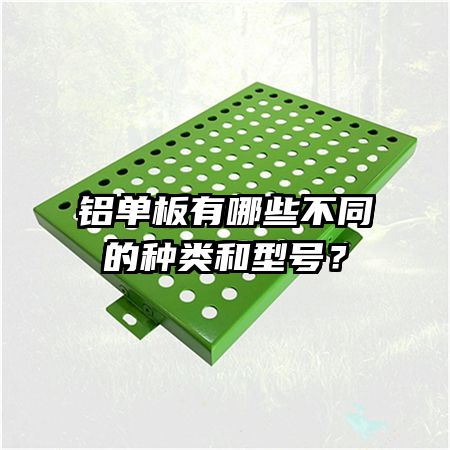
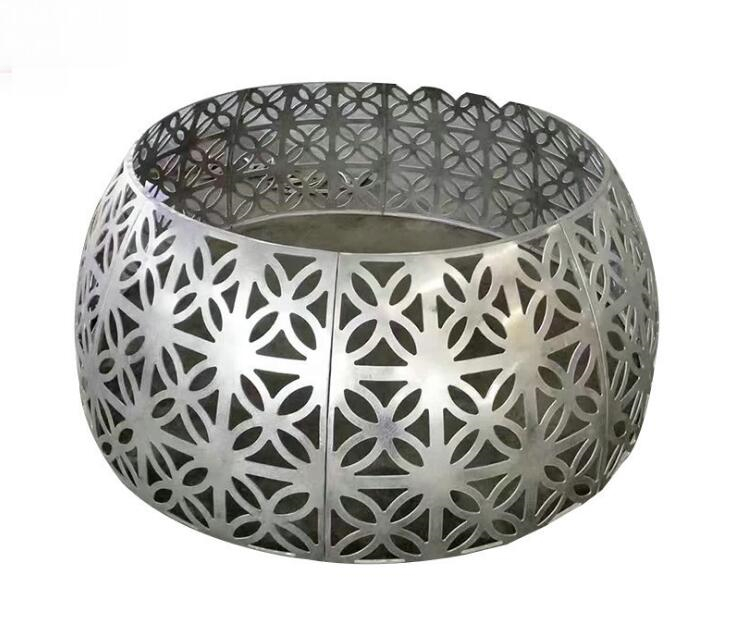
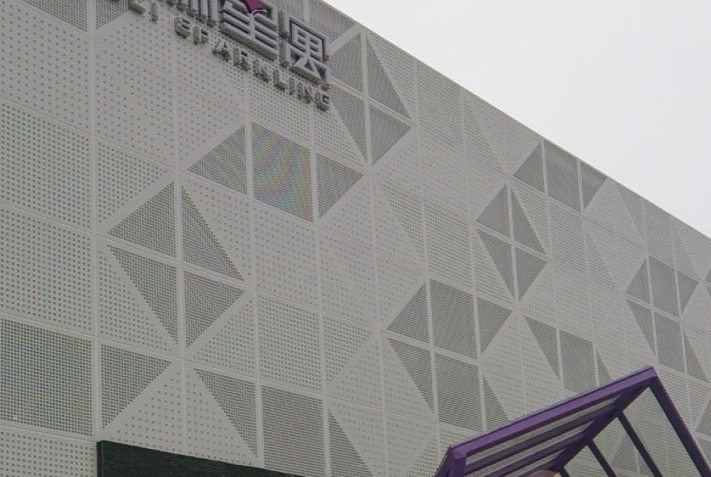
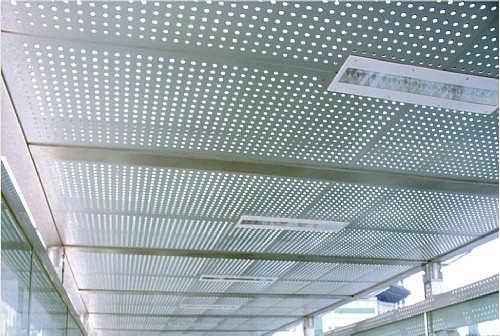
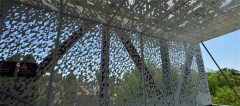
3. Perforated board: Perforated aluminum veneer is processed on the surface to achieve functions such as light transmission and ventilation, and is commonly used in indoor ceilings, partitions, and other occasions.
Summary:
Aluminum veneer, as a widely used material in architectural decoration, can be divided into aluminum alloy veneer and aluminum-plastic panel according to different aspects such as material, surface treatment, thickness, and model. It adopts different surface treatment methods such as fluorocarbon spraying, powder spraying, anodizing, etc. It has different thickness specifications of 2mm, 2.5mm, and 3mm, as well as various models such as flat plate, corrugated plate, and perforated plate. According to actual needs and design requirements, selecting the appropriate type and model of aluminum veneer can achieve the aesthetic effect and functional requirements of building decoration.

 Customer service QQ